
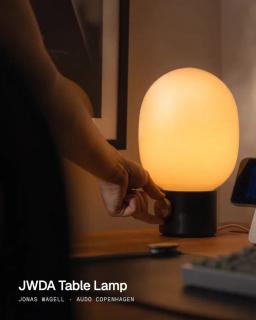

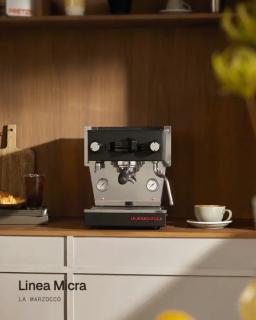
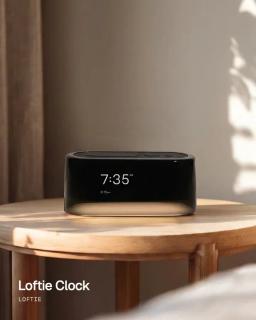

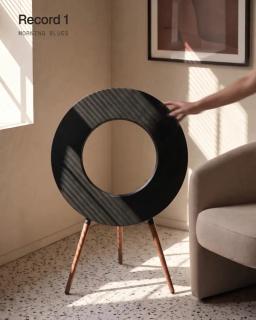

pretzel.design Inspired by the old oil lamp, you still turn the light up by hand.
Case study
Pretzel
A home for well‑made things that mostly runs itself.
I’ve always been a little obsessive about well-made things, whether that’s an interface where every transition has a reason or a product you could recognise from its silhouette alone. Now that AI can produce almost anything in seconds, I suspect that kind of care is about to get rarer, and the eye for it more valuable.
For years I collected them wherever I happened to be, which meant shots bookmarked on X, reels saved on Instagram, products left open in browser tabs and books jotted down in my notes. Whenever I actually needed one, I could rarely remember where it had gone.
Pretzel started as my way out of that mess. It’s a single library for well-made things, sorted and searchable, with every piece credited to whoever made it, and these days it’s as much how I share them as how I keep them.
I’ll admit it was also an excuse to give every tool I’d been curious about a real job to do.
- Role
- Solo. Design, build and marketing
- Timeline
- Two weekends, alongside my job at Deel
- Built with
- Claude Code, with a bit of help from Codex
- Live
- pretzel.design
01Saving in two taps
If saving something takes more effort than forgetting it, people forget, and I’m no exception. So capture lives in the iOS Share Sheet, which is exactly where I am the moment I spot something worth keeping. From a post on X or Instagram it’s Share, then Save To Site, and I’m back to scrolling before the sheet has finished closing.
02What one tap sets off
That tap calls the save API, and by the time I’ve scrolled past the next post it has read the original, checked it isn’t already stored, copied the media across and tagged it. Two scheduled jobs pick things up from there, and all three end with a message back on my phone.
My iPhoneSave APIThe wallHourly · post09:00 · summaryShareLiveReceiptMessage
CopySave To Site
Readthe post
Checkseen it before?N
Copythe media
Tagwith a vision model
My iPhoneSave APIThe wallHourly · post09:00 · summary
Read
CheckN
Copy
Tag
The endpoint is a plain GET, which would normally make me uneasy for anything that writes to a database. It holds up here because the write is idempotent, with every URL stored exactly once, so an accidental double tap still leaves a single card.
Media is copied into Vercel Blob before the card is created, which means a card survives even if the original post is deleted. Anything synced from my X bookmarks waits in a review queue for my approval, whereas saves from the phone go straight through, since sharing something is already a decision.
03A wall that reflows
Most of what I save moves, so every card on the wall plays inline. Underneath, it’s a masonry layout of 260px columns, with as many as the viewport can fit up to a maximum of five. Try dragging the edge of your window.
1,440 px→5 columns
1
2
3
4
5
6
7
8
9
10
11
12
13
14
15
16
17
18
19
20
New cards go into whichever column is currently shortest, which keeps the most recent work running along the top. CSS columns would have saved me some code, but they fill the first column all the way down before starting the next, and the newest saves would have ended up buried.
Each card’s aspect ratio is stored when it’s ingested, so the whole layout can be calculated before a single image arrives and nothing shifts while the page loads. Resize the window and the cards glide across to their new columns. The books wall runs on the same component, with every title shelved by its cover.
04Sorting is a design problem
In the first version a vision model tagged every post however it saw fit, and it decided that nearly everything was Minimal, which left the filters with very little to filter.
Before · 20+ tags
Posts carrying each tag, of 1,100+
- Minimal1,000+
- Vibrant400+
- Cursor Effect3
- Brutalist1
- Parallax0
Meanwhile the Typography, 3D and Editorial walls held 0, 1 and 2 shots, and the goodies had no tags at all.
After · 100+ tags in nine contexts
A sample, by context
- Color
- DarkCreamOrangePastelGradient
- Style
- EditorialBrutalistPlayfulGlassmorphismHand-drawn
- Interaction
- HoverScrollCursorParallax
- Element
- ButtonNavigationPricingTypography
- Material
- BrassWoodCast iron
- Gift for
- A designerA coffee person
The rule the model works to
“Minimal” needs a reason beyond “clean” or “simple”: say what is absent and why that is the point.
What finally worked was treating sorting as an information architecture problem. The model now works from a controlled vocabulary, organised into nine facets that run from colour and style through to material and who something would make a good gift for. Each tag has to point at something the model can actually see in the image, and none of its suggestions go live until I’ve approved them.
05A shelf of goodies
Goodies are the physical side of the library, a shelf of products I’d happily recommend to a friend, from Braun clocks to cast-iron pans, each one picked for how thoughtfully it’s designed.
They’ve also become the centre of the product strategy. In the data they’ve consistently outperformed shots, and they’re the only category with an obvious path to revenue, both of which come up again further down.
Every product is cut out onto a transparent background, so things from completely different brands still sit together like one catalogue. You’ve already met a few of them in the film at the top of this page.
06Jobs, tools and skills
The jobs board comes from the same belief seen from the other side, that the companies who care about craft are the ones worth working for. Every morning a scheduled job crawls the careers pages of design-led companies, from Figma and Stripe to Anthropic and Deel, and keeps only the design roles.
I deliberately kept AI out of this one. Matching runs on a rule set over job titles, which makes every listing deterministic and easy to explain if anyone asks why it’s there. Tools and Skills sit alongside it, covering the apps and AI agent skills I’d genuinely recommend.
07Marketing on a clock
A library nobody visits is just a folder, so distribution has been part of the build from the start, and most of it runs without me.
A day at Pretzel · UTC
- Jobs refreshcareers pages read, design roles kept
- New launches arrivefrom Product Hunt
- My bookmarks arrivefrom X, waiting for my yes
- Morning summaryon my phone, with anything gone quiet
- Threads worth a replyevery fourth morning
- Posts go outX and Instagram, three hours apart, 9 to 9
- Weekly cutsa product reel on Mondays, a carousel on Thursdays
Between 9:00 and 21:00 Pretzel publishes to X and Instagram every three hours, with Instagram cross-posted to Threads. Mondays get a reel of ten goodies and Thursdays a themed carousel, while the remaining slots go to the most opened shots. Tagging the original creator on each of those quietly turns a scheduled post into a bit of outreach.
Engagement is the one channel I keep manual. Each morning Pretzel finds threads on X where people are asking designers to share their work and sends me the best few on Telegram with a Reply button attached, though it never posts a reply by itself. Automated replies are the quickest way I know to lose an audience’s trust.
08On brand, at scale
Every goodie comes wrapped in its maker’s branding, yet everything Pretzel produces around it, reels and films included, has to feel unmistakably like Pretzel. AI will happily hand you one beautiful image, so most of the art direction goes into making the hundredth sit comfortably next to the first.
Motion came in October. The film at the top of this page began life as a handful of flat PNGs, with each product packed into a Pretzel box, tin or bag that only exists on screen, and what holds it together as one brand is a short list of things that never change between scenes, namely the white set, the soft light and the orange wordmark.
Because every product already exists as a clean cut-out, a single asset can become a tile on the site, a frame in a reel or a scene in a film. I art-direct each template once and then reuse it across the whole catalogue.
09Watching what lands
I set up PostHog to answer a handful of specific questions. Does the sign-up gate bring in new people? Which walls actually hold attention? And what are people searching for that isn’t there yet? It runs without session recordings or individual profiles.
That second question ended up changing the roadmap. I tracked shots and goodies side by side for a while, and goodies kept winning on both visits and clicks, so I reordered the product around them and they now open the home page.
Instagram is running the same experiment on a faster loop. If you scroll back through @pretzel.design you can see every iteration in turn, from plain shots to goodies turning in their boxes and now to short explainers, each of which shows a product as though it had been filmed for real when the only input was a single 2D image. My bet is that these will outperform everything that came before, and the numbers will tell me soon enough whether I’m right.
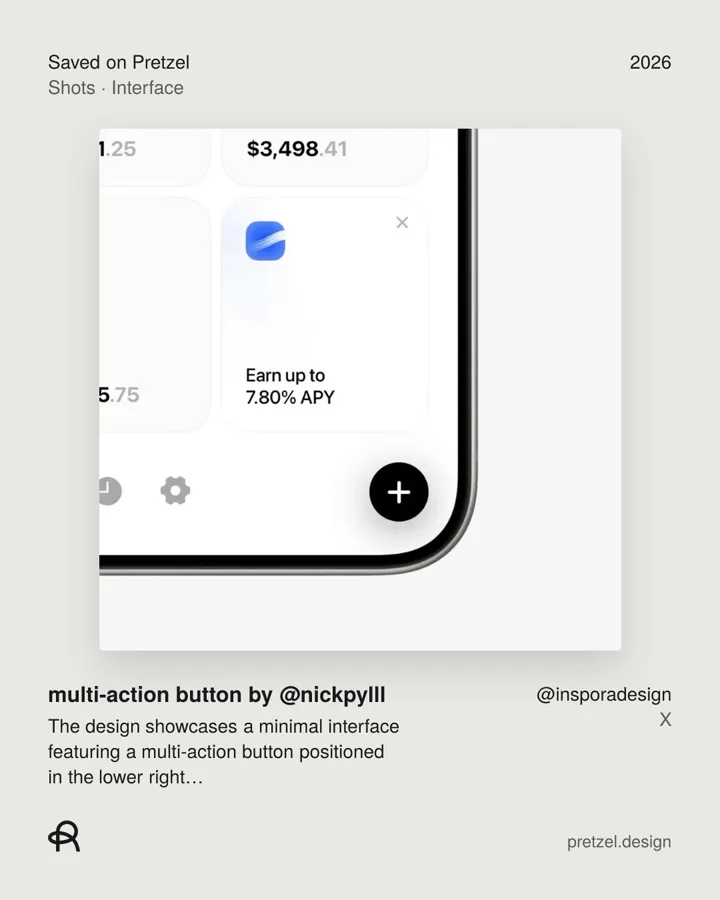
This is roughly how I like to work. Because Pretzel posts every day across X, Instagram and Threads, each format gets plenty of attempts in front of real audiences on more than one platform, which makes it quick to see what’s working and worth the effort to understand why. A new format only has to be cheap enough to try again if the first version falls flat.
10Value before money
Pretzel is something I build for fun, although I’d still like it to pay for itself one day. The rule I’ve set myself is to be useful first and make money second, on the assumption that growth follows naturally from something people genuinely want.
Goodies are where the traction is, so they carry the business model. Amazon affiliate links sit on products I’d recommend anyway (ChatGPT’s computer use took care of the tedious setup), and the social channels and the site are meant to work as one platform, with the feeds bringing in reach that the site can turn into clicks.
It should scale cheaply too. Since every goodie runs through the same cut-out, set and film template, adding another one costs me very little beyond deciding it belongs on the shelf.
Whether any of it works is still an open question, which is half the fun.
11The tools I played with
Half the reason Pretzel exists is so I could put new tools under real load, and here’s what each of them ended up doing.
Claude Code
Wrote most of the code, from a spec I wrote first for every feature.
ChatGPT computer use
Did the clicking for the Amazon affiliate links.
Agent skills
Skills for Neon and ElevenLabs, so Claude knew their APIs.
AI Gateway
A vision model describes and tags every save.
ElevenLabs
Music and sound for the promo film, a voice for the weekly one.
Remotion
The promo film, written as React components.
Playwright
Records websites scrolling, in a browser inside a Vercel Function.
iOS Shortcuts
Saving from the Share Sheet in two taps.
Telegram
A bot that runs the whole thing from my phone.
Underneath all of that sits the stack that keeps it running, layer by layer.
- App
- Next.js 16React 19Tailwind CSS 4Motion
- Hosting
- Vercel FunctionsVercel CronVercel Blob
- Data
- Neon PostgresDrizzle
- AI
- AI SDKAI Gateway
- Members and payments
- ClerkStripe
- Analytics
- PostHog
- Media
- sharpffmpegPlaywright
- Posting
- X APIInstagram APIThreads API
- Alerts
- Telegram Bot API
12Building for fun
In April I wrote The illusion of productivity, about everyone shipping an app in a weekend because not shipping feels like falling behind. Then I built Pretzel in two weekends. Is this the thing I was warning about? Maybe. Maybe not.
The difference I can feel is the reason behind it. I built it because it was fun, and because every few weeks one of these new tools makes something possible that wasn’t before. It feels like being in Disneyland without enough time: I want to try every ride, and I rarely stay on one long enough to go deep.
Where I’m less sure is everything after the build, because a scheduled post on its own isn’t really distribution. What would grow Pretzel is exactly what my post was wary of, which is being visible, posting in public and showing up every day.
I’d love more time for that, although the full-time job is a big part of why Pretzel works the way it does. With so few spare hours I can’t afford to do anything by hand twice, so repeated work turns into a system almost by default, and I keep finding routes around problems that I’d probably have missed with an empty calendar.
Everything on Pretzel’s shelf is there because someone put real craft into it, and I’d like the thing holding them to meet the same standard. I still don’t know which side of my own post Pretzel falls on. For now, I’m enjoying the rides.